


Operating a commercial fleet in Etobicoke, Toronto, or anywhere across the Greater Toronto Area (GTA) involves a complex web of logistics, marketing, and strict regulatory compliance. For business owners in the transportation, construction, and service industries, the Commercial Vehicle Operator’s Registration (CVOR) is more than just a piece of paper. It is your licence to operate on Ontario highways.
While having the certificate is mandatory, displaying your operator information correctly on your vehicle is equally critical. A common point of confusion for new and existing operators involves exactly what needs to be printed on the truck, how big it must be, and where it must go. Failure to adhere to these standards can result in fines, demerit points, and unnecessary delays at inspection stations.
At Branding Centres, we specialize in the intersection of high impact design and regulatory compliance. We understand that your fleet is your most valuable advertising asset. However, we also know that a non compliant vehicle can lead to costly fines and downtime. That is why we offer a seamless service where your fleet graphics are Designed by Branding Centres to ensure maximum brand visibility and legibility, and then expertly wrapped by Vinyl Wrap Toronto to ensure longevity and adherence to safety standards.
This extensive guide will cover everything you need to know about CVOR printing requirements, material selection, design best practices, and how to turn a regulatory obligation into a branding opportunity.
The Legal Requirement: What Actually Needs to Be on the Truck?
There is a prevalent misconception in the industry regarding the CVOR number itself. Many operators believe the 9 digit number must be plastered in massive letters on the side of the cab. According to the Commercial Vehicle Operators’ Safety Manual provided by the Ministry of Transportation of Ontario (MTO), the primary requirement concerning the number is that the CVOR certificate (or a copy) must be carried inside the vehicle at all times.
However, the Highway Traffic Act and Ontario Regulation 424/97 require that the name of the registered operator be clearly displayed on both sides of the commercial motor vehicle. This allows MTO enforcement officers and police to identify the entity responsible for the vehicle, the driver, and the load.
Why Display the Number if it is Not Mandatory?
While the regulation specifically demands the name, industry best practice involves displaying the CVOR number alongside the name. Why do most operators do this? It speeds up inspections. If an officer can instantly read your CVOR number from the side of the truck, they can query your safety rating without stopping the vehicle or demanding paperwork. This efficiency keeps your drivers moving and your business profitable.
Therefore, a compliant and efficient design usually includes:
1. The Registered Operator Name: This must match the name on your CVOR certificate exactly.
2. The CVOR Number: Displayed clearly for ease of identification.
3. Vehicle Unit Number: Essential for internal fleet tracking and often requested during inspections.
Detailed Printing Specifications: Size and Font
When Branding Centres designs your fleet graphics, we do not just make them look good. We ensure they function as effective communication tools for both your customers and MTO officers. If your identification is illegible, you risk being pulled over for closer inspection, which costs you time and money.
Character Height Requirements
The law sets a specific minimum for the size of the lettering on your vehicle. Under Ontario Regulation 424/97, the name of the operator must be displayed in letters that are not less than 75 millimetres (3 inches) in height.
However, meeting the bare minimum is not always the best strategy for a moving vehicle. At Branding Centres, we often recommend increasing the size of the text to ensure readability at highway speeds and from greater distances.
Recommended Visibility Standards:
• Legal Minimum: 75 mm (3 inches). This is generally readable from about 6 to 15 metres (20 to 50 feet).
• Recommended Standard: 100 mm (4 inches). This size is readable from approximately 9 to 30 metres, which is much safer for highway identification.
• Heavy Equipment: For dump trucks or highway tractors, 150 mm (6 inches) or larger is preferred to ensure the text is not dwarfed by the size of the vehicle.
Font Selection: Clarity Over Flair
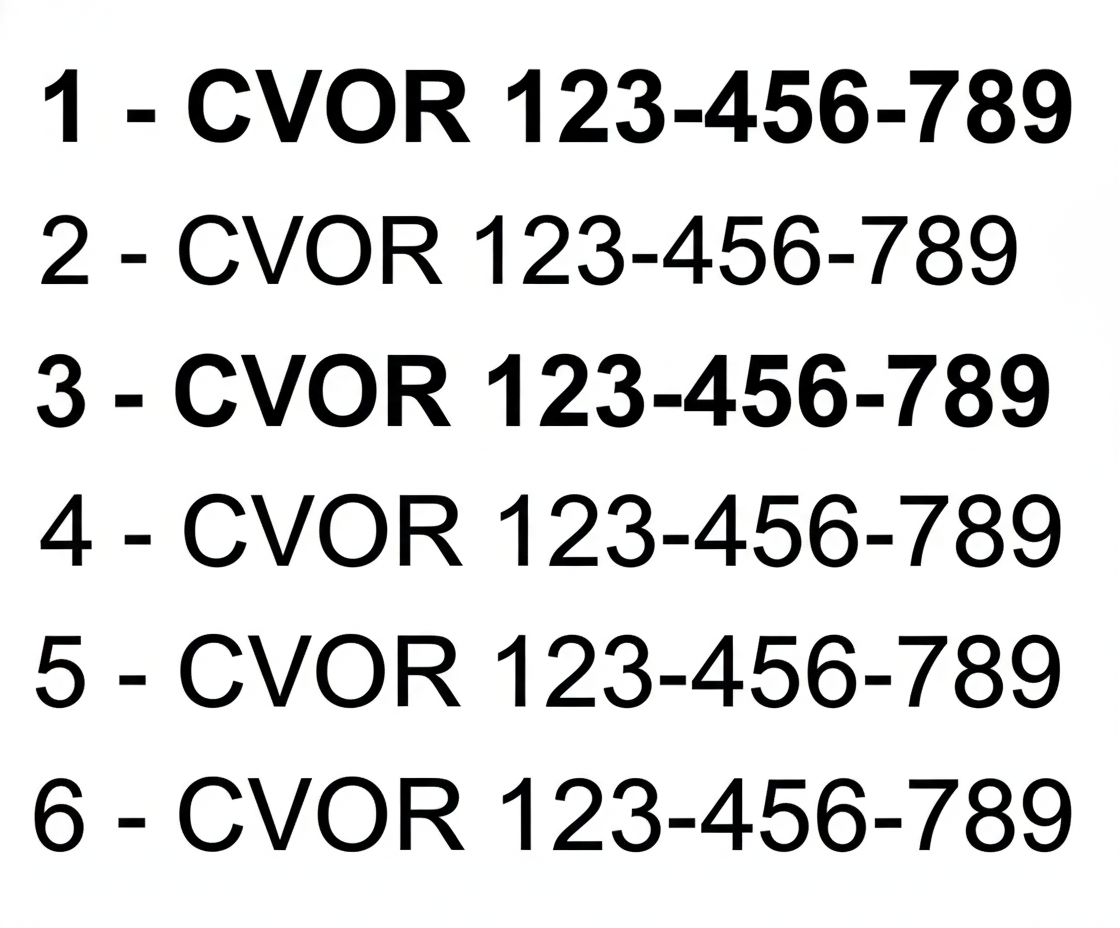
The choice of font is critical. While a script font might look elegant on a wedding invitation, it is a disaster on the side of a moving Ford F-150 or a Freightliner.
Sans Serif is King We recommend using clean, bold, sans serif fonts such as Helvetica, Arial, or Open Sans. These fonts lack the decorative “feet” at the ends of letters, making them easier for the human eye and license plate readers to decipher at highway speeds.
Characteristics of a Compliant Font:
• Distinct Character Shapes: The font must allow for easy differentiation between similar characters. For example, a capital “I” should look different from the number “1”, and a capital “O” should be distinct from the number “0”.
• Stroke Width: The thickness of the lines forming the letters must be balanced. If the stroke is too thin, the letters will disappear at a distance. If it is too thick, the loops in letters like “e” or “a” will close up, making them unreadable.
• Spacing (Kerning): Characters must have sufficient space between them. If letters are touching, they blur into a block when the vehicle is moving. We ensure appropriate tracking (space between letters) to maintain legibility.
Colour Contrast and Visibility
High contrast is non negotiable. Placing dark grey text on a black truck is a recipe for enforcement trouble. The text must “pop” off the background to meet the requirement of being “clearly visible”.
Ensuring High Contrast Ratios
Accessibility and visibility standards suggest a high contrast ratio between the text and the background.
• Light Backgrounds: Use black, dark blue, or deep red text on white or silver vehicles.
• Dark Backgrounds: Use white, bright yellow, or metallic silver text on black, navy, or forest green vehicles.
If your brand colours are subtle, Branding Centres can design a high contrast “patch” or background box behind the text to ensure it remains compliant without compromising your overall brand aesthetic.
Reflective Vinyl for 24/7 Visibility
For vehicles operating at night, such as tow trucks or emergency repair units, using reflective vinyl for the lettering is a smart safety choice. This ensures that your CVOR number and company name are visible to enforcement officers and other drivers even in low light conditions.
Material Science: Durability in Ontario Weather
Choosing the right material for your CVOR numbers and company branding is a performance decision. Ontario vehicles face a brutal cycle of freezing winters, road salt, scorching humid summers, and UV radiation. A cheap sticker will crack, fade, and peel within months, leaving your fleet looking unprofessional and potentially non compliant.
At Branding Centres, we specify only premium materials for commercial applications. We rely on the trusted quality of 3M and Avery Dennisonfilms.
Cast vs. Calendared Vinyl
Understanding the difference between these two main types of vinyl is essential for fleet managers.
| Feature | Cast Vinyl (e.g., 3M IJ180) | Calendared Vinyl |
| Manufacturing Process | Poured as a liquid, then cured. | Squeezed through rollers like pizza dough. |
| Durability | 7 to 10 years outdoor life. | 1 to 5 years outdoor life. |
| Memory | No memory. It stays where you put it. | Has memory. It wants to shrink back to original shape. |
| Shrinkage | Negligible shrinkage over time. | Significant shrinkage; adhesive lines appear. |
| Conformability | High. Conforms to rivets and curves. | Low. Best for flat surfaces only. |
| Cost | Higher initial investment. | Lower initial cost. |
For any long term commercial vehicle, Cast Vinyl is the superior choice. When Vinyl Wrap Toronto wraps a fleet vehicle, we typically use 3M IJ180mC or Avery Dennison SW900. These materials conform perfectly to the complex curves of modern vehicles, from the fenders of a Ford Transit to the rivets on a cube van. They do not shrink, meaning your CVOR number will not look warped or peel at the edges after a few months of winter driving.
The Importance of Lamination
Printing the number is only step one. Protecting it is step two. All our commercial prints are finished with a high quality laminate, such as 3M Scotchcal 8518. This clear layer acts as a shield against:
• UV Rays: Prevents the ink from fading to a dull grey.
• Abrasion: Protects against stone chips and branch scratches.
• Chemicals: Resists damage from aggressive truck wash soaps and road salts.
The “No Magnet” Rule: Permanence is Key
One of the most critical regulations regarding CVOR identification is the requirement for the markings to be permanently or semi permanently affixed to the vehicle. This specifically prohibits the use of magnetic signs for mandatory identification.
Why are Magnets Prohibited?
The MTO prohibits magnetic signs for CVOR identification to prevent “number swapping.” If identification were easily removable, it would allow a carrier to move a “clean” CVOR number to a vehicle with a poor safety record to evade inspections. Furthermore, magnetic signs can detach at highway speeds, posing a safety hazard.
Acceptable Methods of Application:
1. Vinyl Decals: High tack adhesive vinyl that requires heat and tools to remove.
2. Direct Paint/Stenciling: Permanent application directly to the vehicle body.
3. Full or Partial Wraps: Large scale vinyl application that integrates the ID into the design.
Strategic Placement: Where to Apply the Decals
The regulation states that the information must be on both sides of the commercial motor vehicle. This usually refers to the power unit (the truck or tractor), not the trailer, although branding the trailer is excellent for marketing.
The Door vs. The Sleeper
On a standard pickup or straight truck, the front doors are the most common location. It is the traditional spot officers look for identification. On larger highway tractors with sleeper cabs, you have more real estate. Placing the logo and CVOR number on the sleeper box often allows for a larger design without being broken up by door handles or mirrors.
Avoiding Obstructions
When Vinyl Wrap Toronto installs your graphics, our team pays careful attention to vehicle geography. We avoid placing critical legal lettering over:
• Door Handles and Keyholes: This distorts the text and leads to peeling.
• Body Lines and Rails: Deep grooves can make text unreadable from an angle.
• Wheel Wells: Text placed too low gets covered in road mud and salt in the winter, rendering it illegible and non compliant.
The Installation Process: Wrapped by Vinyl Wrap Toronto
The longevity of your CVOR decals and fleet branding depends heavily on the installation. You can buy the best vinyl in the world, but if it is applied to a dirty surface or stretched incorrectly, it will fail. This is where our partners at Vinyl Wrap Toronto excel.
Surface Preparation
Before a single inch of vinyl touches your truck, the surface must be clinically clean. Our team uses a multi stage cleaning process to remove:
• Tar and Road Grime: Common on commercial vehicles.
• Wax and Grease: Any residue will prevent the adhesive from bonding.
• Moisture: Even microscopic water droplets can cause failure in freezing temperatures.
Temperature Control
Vinyl application is chemistry. The adhesive requires a specific temperature range to bond with the clear coat of the vehicle. Installing decals outdoors in an Etobicoke winter is a recipe for failure. Vinyl Wrap Toronto operates in a climate controlled facility, ensuring that the vehicle and the vinyl are at the optimal temperature for a permanent bond.
Post Heating
After the vinyl is applied, particularly over rivets or into deep channels on a van, the installers use heat guns to “set” the memory of the vinyl. This ensures the material relaxes into its new shape and will not pop out later.
Fleet Consistency and Brand Recognition
While the immediate goal of CVOR printing is compliance, the broader goal is brand authority. Your fleet is likely the most visible part of your company. A single truck in Toronto can generate between 30,000 and 70,000 impressions in a single day.
The Halo Effect
When a potential customer sees a fleet of vehicles that look uniform, clean, and professionally branded, they subconsciously assign positive attributes to the company: reliability, stability, and professionalism. This is the “Halo Effect”. By integrating your mandatory CVOR numbers and safety decals into a cohesive vehicle wrap design, you elevate your brand above the “guy with a truck” stereotype.
Consistency Across Vehicle Types
Most fleets are mixed. You might have a Ram 1500 for sales, a GMC Savana for installations, and a Hino box truck for deliveries. Branding Centres creates adaptive design files. We ensure that your logo, your CVOR number placement, and your brand colours remain consistent regardless of the vehicle’s shape or size. This consistency reinforces brand recall.
Integrating Compliance with Marketing
Since you must put lettering on your truck, why not make it work for you?
1. QR Codes: We can integrate QR codes near your contact info that link directly to your booking page or safety record.
2. Taglines: Include your unique selling proposition (USP) near your name.
3. Services List: A bulleted list of key services helps onlookers understand exactly what you do in seconds.
Maintenance: Keeping Your Compliance Visible
A dirty truck is a bad look, but a truck with illegible compliance numbers is a legal liability. If mud, salt, or soot obscures your CVOR name or number, you can be fined for failure to display.
• Regular Washing: Hand washing is best for wraps. If using a pressure washer, keep the nozzle at least 12 inches away and avoid spraying the edges of the decals directly to prevent lifting.
• Inspection: Make checking the condition of the decals part of your driver’s daily circle check. Look for peeling corners or fading text.
• Prompt Replacement: If a decal is damaged in a minor scrape, have it replaced immediately. Vinyl Wrap Toronto keeps your design files on hand for quick reprints and repairs.
Why Choose Branding Centres?
Navigating the requirements of the MTO while trying to build a visually stunning brand can be difficult. Branding Centres offers a turnkey solution for Toronto businesses.
• Consultation: We review your fleet and your compliance needs.
• Design: Our graphic designers create layouts that are legally compliant and visually arresting.
• Production: We print on top tier 3M and Avery Dennison materials.
• Installation: Your vehicles are wrapped by Vinyl Wrap Toronto, ensuring a flawless finish.
Whether you are a single owner operator in Mississauga needing a simple door decal, or a logistics company in Vaughan needing full fleet wraps, we handle the details so you can focus on the road.
Conclusion: Drive with Confidence
Compliance is mandatory; looking good is optional-but highly recommended. By understanding the specific size, font, and placement requirements for your CVOR information, you protect your business from fines and inspections. By investing in professional design and high quality materials, you turn that compliance requirement into a powerful marketing asset.
Your vehicles are a reflection of your business standards. Ensure they say the right thing about you.
Ready to upgrade your fleet branding or need new CVOR numbers? Click on this page here or Contact Branding Centres today. Let us design a solution that keeps you legal and makes you memorable.
Frequently Asked Questions (FAQs)
1. Does the CVOR number itself have to be on the truck?
Technically, the Highway Traffic Act requires the name of the registered operator to be displayed. However, industry best practice is to display the CVOR number as well. This assists MTO officers in quickly identifying your authority, often resulting in faster processing at inspection stations.
2. Can I use magnetic signs for my CVOR information?
No. Ontario regulations explicitly state that the identification must be permanently or semi-permanently affixed. Magnetic signs are considered removable and are not permitted for CVOR identification purposes. They can also fly off at highway speeds.
3. Do I need a CVOR for a pickup truck used for personal tasks?
Generally, no. If your pickup truck has a manufacturer’s gross vehicle weight rating (GVWR) of 6,500 kg or less, is fitted with the original box, and is used strictly for personal purposes without compensation, it is exempt from the CVOR requirement.
4. What happens if my lettering peels off?
Driving with missing or illegible operator identification is a violation. You can be fined, and it affects your Carrier Safety Rating (CSR). It is the operator’s responsibility to ensure the markings are clearly visible at all times. Using high quality cast vinyl from Vinyl Wrap Toronto helps prevent premature peeling.
5. How big should the letters be?
The regulation specifies they must be at least 75mm (3 inches) in height. However, for better visibility and safety, we recommend using letters that are at least 100mm (4 inches) tall. They should be in a colour that contrasts sharply with the vehicle paint
Give us a call at (416) 288-8661 or visit our office located at 24 Ronson Dr, Unit 1, Etobicoke, ON, M9W1B4 to speak to one of our developers.


