


Operating a business in Toronto and the Greater Toronto Area (GTA) comes with a unique set of challenges, not the least of which is the weather. For business owners and fleet managers, your vehicles are your most visible marketing assets. They travel the 401, navigate downtown traffic, and park at job sites from Mississauga to Scarborough. But when you invest in a commercial vehicle wrap like a truck wrap, you need to know it will survive the elements.
Canadian weather is notorious for its extremes. We face blistering heat and high UV index in July, followed by deep freezes, road salt, and slush in February. A common question we receive at Branding Centres is simple but critical: “How long will my truck wrap actually last in these conditions?”
The short answer is that a high-quality, professionally installed vehicle wrap typically lasts between 5 to 7 years. However, the long answer involves variables such as material choice, installation quality, and maintenance habits.
In this guide, we will explore the science of vinyl longevity in the Canadian climate. We will explain why your design must be strategic, why the installation environment matters, and how to maintain your fleet to maximize your Return on Investment (ROI). Furthermore, we will detail how our seamless process works: your graphics will be expertly Designed by Branding Centres and professionally wrapped by Vinyl Wrap Toronto.
The Lifespan of a Truck Wrap: Setting Expectations
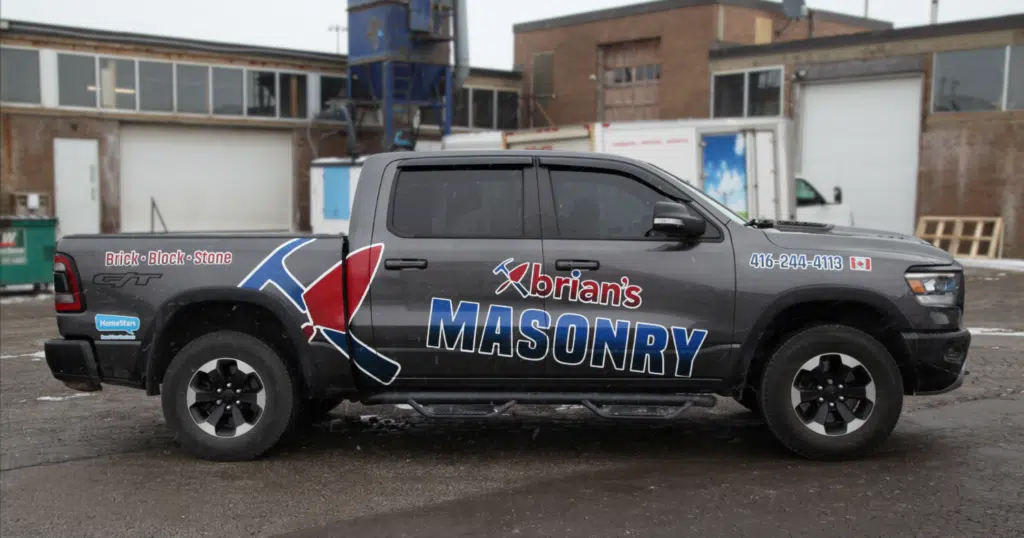
When you research vehicle wraps, you will often see manufacturer warranties ranging from 3 to 7 years. In a controlled environment, vinyl is incredibly durable. However, a truck driving daily in Ontario is not in a controlled environment. It is a mobile billboard subjected to chemical, thermal, and physical stress.
The General Rule of Thumb
For most commercial applications in Canada, you can expect a lifespan of 5 to 7 years for vertical surfaces (the sides of your truck or van). Vertical surfaces receive less direct sunlight and snow accumulation than horizontal surfaces.
Horizontal surfaces, such as the hood and roof, take a direct beating from the sun’s UV rays and are often where snow and ice sit for extended periods. For these areas, the lifespan may be slightly shorter, often closer to 3 to 5 years if not properly cared for.
Why Quality Matters
Not all vinyl is created equal. If you opt for a budget-friendly material, you might see failure in as little as 1 to 2 years. If you invest in premium cast vinyl Like 3M or Avery Dennison, you are looking at that 5 to 7 year window. At Branding Centres, we believe in doing it right the first time. Using inferior materials in a climate like ours is a false economy. The cost to remove a cracked, failed cheap wrap often exceeds the savings you made upfront.
The Science of Vinyl Performance in Extreme Cold
To understand why wraps last (or fail), you need to understand how vinyl interacts with temperature. Canada’s temperature fluctuations are the biggest enemy of adhesive graphics.
Thermal Shock and Expansion
Vinyl is a plastic. Like all plastics, it expands when hot and contracts when cold. In Toronto, we can experience temperature swings of 20 degrees in a single day during spring and autumn.
• Contraction: In extreme cold (think -20°C in Vaughan or Brampton), vinyl tries to shrink. If the vinyl is of low quality, or if it was stretched too much during installation, this shrinkage causes the vinyl to “pop” out of deep recesses or lift at the edges.
• Adhesion: The adhesive bond can become brittle in extreme cold. This is why professional installation is non-negotiable.
The Impact of Road Salt and Brine
Ontario roads are heavily salted in the winter to prevent icing. While this keeps drivers safe, it creates a harsh chemical environment for your vehicle. Road salt and liquid brine are corrosive.
• Corrosion: If a wrap has lifted edges, salt water can creep underneath. This not only ruins the adhesive but can cause rust on the vehicle panel itself.
• Staining: Salt that is left to dry on the surface of a wrap can act as an abrasive. Over time, this can dull the laminate finish, making your vibrant brand colours look washed out.
The “Albedo Effect” of Snow
UV rays are the primary cause of fading in printed graphics. You might think UV damage only happens in summer, but snow creates a unique challenge. Snow reflects up to 80% of UV radiation. This means on a bright, snowy day in Etobicoke, your truck is getting hit by UV rays from the sun above and the reflection from the snow below. High-quality UV laminates are essential to prevent your red logos from turning pink.
Material Matters: Cast vs. Calendared Vinyl in the North
The most significant factor in how long your wrap lasts is the type of vinyl used. In the sign industry, we categorize vinyl into two main types: Cast and Calendared.
Cast Vinyl: The Premium Choice for Canada
Cast vinyl is the industry gold standard for vehicle wraps. It is manufactured by pouring liquid vinyl into a mould and curing it.
• Zero Memory: Because it starts as a liquid, cast vinyl has no “memory.” It does not try to shrink back to a specific shape. This makes it incredibly stable.
• Conformability: It can be heated and stretched over complex curves, rivets, and bumpers without popping back up.
• Durability: It is engineered to withstand UV exposure and temperature extremes for 7+ years. For any vehicle with curves (which is almost every modern work truck and van), Branding Centres specifies premium cast vinyl from top manufacturers.
Calendared Vinyl: The Economy Option
Calendared vinyl is made by rolling a dough-like substance through massive rollers to flatten it out.
• Memory: Because it was stretched during manufacturing, it has a “memory.” It constantly wants to shrink back to its original shape.
• Failure Risk: In the cold Canadian winter, this shrinkage accelerates. This leads to cracking, peeling edges, and “tenting” over rivets.
• Use Case: Calendared vinyl is fine for flat, short-term signs, but we generally advise against using it for long-term vehicle wraps in our climate.
Comparison of Material Performance
| Feature | Cast Vinyl (Premium) | Calendared Vinyl (Economy) |
| Manufacturing Process | Liquid poured into a casting sheet | Solid dough squeezed through rollers |
| Durability | 5 to 7+ Years | 1 to 3 Years |
| Shrinkage | Negligible | Significant over time |
| Cold Weather Performance | Excellent (Stable) | Poor (Prone to cracking/lifting) |
| Cost | Higher Initial Investment | Lower Initial Investment |
| Best Application | Full wraps, curves, rivets | Flat surfaces, temporary decals |
The Branding Centres Advantage: Design That Survives
Longevity isn’t just about the plastic; it is about the design strategy. A wrap that is Designed by Branding Centres is created with the vehicle’s anatomy and the environment in mind.
Designing for Durability
Our designers understand that certain areas of a truck are high-wear zones.
• Door Handles: We avoid placing critical text or complex imagery directly over door handle cups where fingernails scratch the vinyl daily.
• Rocker Panels: The bottom 6 inches of a truck take the most abuse from road salt and gravel. We often recommend keeping this area simple or using a solid colour that is easy to patch if damaged, rather than a complex photo that is hard to match.
• Seams and Gaps: We design your graphics to flow naturally across door gaps, minimizing the risk of peeling where the vinyl is cut.
High-Contrast Visibility
In the grey, overcast days of a Toronto winter, visibility is reduced. A design that looks great on a backlit computer screen might disappear in a snowstorm. We utilize high-contrast colours and bold typography to ensure your brand is legible even when the truck is covered in a thin layer of road spray.
The Installation Process: Wrapped by Vinyl Wrap Toronto
You can buy the most expensive vinyl in the world, but if it is installed in a dusty, cold garage, it will fail. This is why our projects are wrapped by Vinyl Wrap Toronto. Their facility and process are optimized for longevity.
Climate-Controlled Facility
Vinyl adhesive is temperature-sensitive during application. If it is too cold, the glue won’t bite. If it is too humid, moisture gets trapped. Vinyl Wrap Toronto operates in a strictly climate-controlled environment. This ensures the initial bond is perfect.
The Importance of Cleaning
The vehicle must be surgically clean before a single inch of vinyl is applied. Road tar, grease, wax, and salt residue will cause the vinyl to lift. Our installers spend hours prepping the vehicle, removing badges, handles, and lights to ensure the vinyl wraps completely around edges rather than just sitting on top of them.
Post-Heating: The Secret Weapon
This is the step that separates amateurs from professionals. After the wrap is applied, installers must go over the entire vehicle, specifically deep recesses and curves, with a heat gun or torch. This process, called post-heating, brings the vinyl to a specific temperature (usually around 90°C or higher depending on the brand). This “kills” the memory of the vinyl, permanently setting it in its new shape. Without post-heating, the vinyl would eventually try to pull out of the deep channels in your Mercedes Sprinter or Ford Transit, leading to failure.
Real-World Use Cases in Ontario
How does this translate to your specific fleet? Here is what you can expect based on how you use your vehicles.
Construction and Contracting Fleets
If you operate heavy-duty pickups like the Ford F-150 or Chevrolet Silverado, your trucks are often on job sites. They face mud, gravel, and potential scrapes.
• Lifespan: Expect 4 to 5 years for a pristine look.
• Strategy: We recommend full wraps for paint protection. The vinyl acts as a sacrificial layer, taking the scratches from bushes and tools so your paint doesn’t have to. When you peel the wrap off to sell the truck, the paint underneath looks brand new, increasing resale value.
Delivery and Logistics
For fleets of Ford Transit or Ram ProMaster vans, the wear and tear come from high mileage and constant door operation.
• Lifespan: 5 to 7 years.
• Strategy: Focus on durable design around the rear doors and sliding side doors. Since these are opened hundreds of times a day, we ensure the vinyl is wrapped around the edges to prevent lifting from constant handling.
Long-Haul Transport
Highway driving exposes vehicles to high-speed impact from bugs, stones, and salt spray.
• Lifespan: 5 to 7 years.
• Strategy: Front-facing surfaces take the most abuse. We often recommend adding a layer of Paint Protection Film (PPF) over the vinyl on the front bumper and hood for an extra layer of armor against stone chips.
Protecting Your Investment: Winter Maintenance Tips
To get the full 7 years out of your wrap, you need to care for it. Winter requires a specific maintenance routine.
Washing Frequency
You should wash your wrapped vehicle more often in the winter, not less. Salt is corrosive. Leaving a crust of salt on your wrap for weeks will degrade the laminate and the vinyl.
• Touchless is Best: Use touchless car washes or hand wash.
• Avoid Brushes: Automatic car washes with spinning bristles are the enemy. They hold dirt and grit from the truck before you, acting like sandpaper on your glossy wrap. They can also snag the edge of a graphic and rip it.
• Pressure Washing: If you use a pressure washer, keep the nozzle at least 12 inches away and keep the pressure below 2000 psi. Never spray directly at the edge of a decal; spray perpendicular to the surface.
Snow and Ice Removal
This is where many wrap owners make a fatal mistake.
• No Scrapers: Never take a hard plastic ice scraper to a wrapped surface. It will scratch the vinyl and potentially gouge it.
• Use a Soft Brush: Use a snow brush with soft bristles to clear the bulk of the snow.
• Heat is Your Friend: Use your vehicle’s defroster and cabin heat to loosen ice. Let it melt off rather than chipping it away.
Parking Strategies
If possible, park indoors. We know this isn’t feasible for every fleet. If you must park outside, try to avoid parking under trees (falling branches and sap) or in areas with heavy splashing from passing traffic.
Signs of Wear and When to Replace
Even the best wrap won’t last forever. Recognizing the signs of age helps you plan your budget for replacement.
Fading and Discoloration
The first sign of age is usually fading on the horizontal surfaces (hood and roof). Red and yellow inks tend to fade faster than blues and blacks. If your brand colours are looking tired, it reflects poorly on your business image.
Cracking
If you see tiny hairline cracks appearing in the vinyl, usually on the hood or roof, this is a sign the vinyl has dried out and become brittle.
• Action Required: You must remove the wrap immediately. Once vinyl cracks, it begins to bake onto the paint. Removing a cracked wrap is significantly more expensive and labor-intensive than removing an intact one because it comes off in tiny flakes rather than large sheets.
The “Ghosting” Effect
When you remove decals that have been on a vehicle for years, you might see “ghosting.” This is where the paint under the decal looks brand new, while the exposed paint around it has faded slightly from the sun. A quick polish usually blends this, but it serves as a reminder of how well the wrap was protecting your paint.
Cost vs. Longevity: Is It Worth It?
When you look at the price tag of a full wrap, it is a significant investment. But you must view it over the lifespan of the product.
ROI Analysis
Let’s assume a full wrap costs $4,000 and lasts 5 years. That breaks down to $800 per year, or roughly $66 per month.
• Impressions: A single vehicle in a city like Toronto generates 30,000 to 70,000 impressions per day.
• CPM: The Cost Per Thousand Impressions (CPM) for a vehicle wrap is roughly 0.48. Compare this to radio(7.75), outdoor billboards (3.56),or television (20+). There is simply no other advertising medium that delivers this volume of local exposure for such a low long-term cost.
Paint vs. Wrap
A high-quality custom paint job can cost two to three times as much as a wrap. Furthermore, paint is permanent. If you lease your vehicles, you cannot paint them. A wrap allows you to change the colour and branding of a leased fleet and then strip it back to factory white before returning the vehicles, avoiding lease penalties.
Conclusion: Drive Your Business Forward
A truck wrap is one of the smartest marketing investments a Canadian business can make. It transforms a depreciating asset into a revenue-generating machine. While our weather is harsh, modern technology and expert craftsmanship allow us to defy the elements.
By choosing the right materials, ensuring professional installation, and following a winter maintenance routine, your fleet will look professional and vibrant for years.
At Branding Centres, we handle the entire process. From the initial creative concept to the final installation, we ensure your brand stands out on the road. Your project will be visually strategized and Designed by Branding Centres, and then meticulously wrapped by Vinyl Wrap Toronto.
Ready to weather the storm and boost your brand? Your fleet is moving every day; make sure it’s moving your business forward. Contact us today or click here to get started.
Frequently Asked Questions (FAQs)
1. Can I wrap a leased truck?
Yes, absolutely. Vehicle wraps are the ideal solution for leased vehicles. The vinyl protects the original factory paint from UV rays, scratches, and stone chips. When your lease term is up (usually 3 to 5 years), the wrap can be professionally removed, revealing pristine paint underneath. This can often help you avoid “excess wear and tear” charges from the dealership.
2. How long does the installation take?
For a full truck wrap, the installation process typically takes 2 to 3 days. This includes time for thorough cleaning, dismantling of hardware (like door handles and mirrors), application, and the critical post-heating process. We can often schedule fleet installations over weekends or in staggered shifts to minimize downtime for your business.
3. Will the wrap peel in winter?
If installed correctly with high-quality cast vinyl, the wrap should not peel. Peeling usually occurs due to poor surface preparation (dirt left under the edges) or using low-quality calendared vinyl that shrinks in the cold. Our partners at Vinyl Wrap Toronto use industry-leading edge-sealing techniques to ensure the wrap stays put, even in Ontario winters.
4. Can I pressure wash my wrapped truck?
Yes, but you must be careful. Keep the water pressure below 2000 psi, keep the water temperature below 80°C (180°F), and use a wide spray pattern (40-degree fan tip). Most importantly, keep the nozzle at least 12 inches away from the vehicle and never spray directly at the edges of the vinyl at a sharp angle, as this can lift the wrap.
5. What happens if my wrap gets damaged in an accident?
One of the benefits of a wrap is that it is repairable. If a fender bender scratches the vinyl on your bumper or door, we don’t have to re-wrap the entire truck. We can print and reinstall just the damaged panel. This makes repairs much faster and cheaper than repainting.
6. Does the wrap cover rust?
No. Vinyl wraps need a smooth, clean surface to adhere to. If your truck has existing rust, the vinyl will not stick to it properly, and the rust will likely continue to spread underneath the vinyl. We recommend repairing any rust spots or body damage before applying a wrap to ensure longevity.
7. Is window perforation safe for winter driving?
Yes. Perforated window film allows you to see out while displaying graphics to those looking in. We use an optical clear laminate over the perforation. This prevents ice and snow from getting stuck in the tiny holes, which would otherwise block your vision. It also allows you to use your rear wipers without damaging the print.


