


In the fast paced digital ecosystem of the Greater Toronto Area, physical media has not only survived but is experiencing a strategic resurgence. For businesses in Toronto, Etobicoke, and across Ontario, producing a high quality magazine/booklets is no longer just about disseminating information. It is about establishing authority, ensuring longevity, and cutting through the relentless noise of digital advertising.
A professionally printed magazine serves as a tactile ambassador for your brand. Unlike a social media post that scrolls away in seconds, a magazine claims physical real estate on a coffee table, a boardroom desk, or a waiting room in Mississauga. It offers a sensory experience – the weight of the stock, the texture of the finish, and the vibrancy of the ink – that digital screens simply cannot replicate.
At Branding Centres, we specialize in managing this complex production process. From the initial layout strategized by our design team to the final bindery and distribution, we help Toronto businesses navigate the technical and logistical landscape of professional publication. This guide explores everything you need to know about magazine printing in Toronto, from selecting the right paper engineering to mastering Canada Post distribution.
The Strategic Value of Print in a Digital World
The rationale for investing in physical publications is rooted in credibility and engagement. In an era of fake news and fleeting content, print signals permanence and investment.
The “Thud” Factor and Credibility
There is a psychological weight to a printed object. When a customer picks up a substantial, glossy magazine, they subconsciously attribute higher value to the content and the brand behind it. This is particularly effective for high ticket industries common in the GTA, such as real estate development, luxury automotive, and financial services. A physical magazine implies that the company has the resources and stability to invest in long term communication.
Longevity and Pass-Along Rate
Digital ads are ephemeral. A magazine has a “shelf life” that can last for months or even years. In professional settings like medical offices or corporate lobbies in Vaughan or Brampton, a single copy is often read by multiple people. This “pass-along rate” significantly lowers the effective cost per impression (CPM) over the life of the publication, making it a highly efficient marketing tool when viewed through a long term lens.
Offset vs. Digital Printing: Making the Right Choice
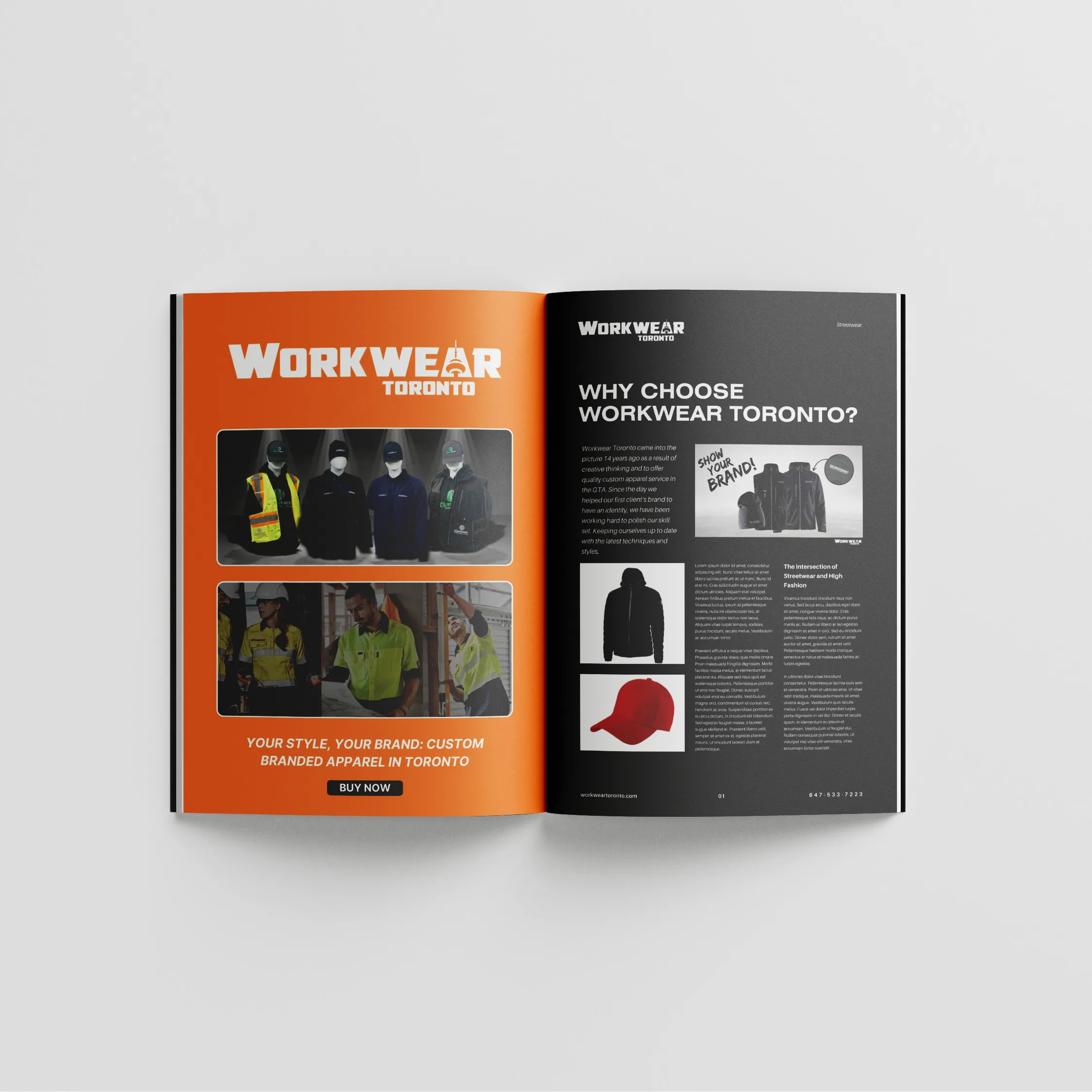
The first major technical decision in your project will be selecting the printing method. This choice is primarily dictated by your print volume, budget, and turnaround requirements.
Commercial Offset Lithography
Offset printing is the traditional workhorse of the publishing industry. It involves transferring an inked image from a metal plate to a rubber blanket and then onto the paper.
• Best For: High volume runs (typically over 500 to 1,000 copies).
• Advantages: It offers the lowest unit cost at high volumes and provides superior color fidelity. It is the only method that accurately supports Pantone Matching System (PMS) inks, which is critical for brands with strict corporate color guidelines.
• The Trade-off: There is a significant upfront setup cost for making plates, which makes it uneconomical for very short runs.
Digital Printing
Digital printing transfers toner or liquid ink directly to the paper without plates, functioning similarly to a sophisticated office printer but on an industrial scale.
• Best For: Short runs (1 to 500 copies), prototypes, or rush jobs in Downtown Toronto.
• Advantages: Almost zero setup time means faster turnaround. It also enables Variable Data Printing (VDP).
• Variable Data Printing (VDP): This technology allows you to customize every single magazine in a run. You could print the recipient’s name on the cover or change advertisements based on the subscriber’s location in the GTA (e.g., showing Etobicoke ads to Etobicoke residents).
Comparative Analysis: Offset vs. Digital
| Feature | Offset Printing | Digital Printing |
| Ideal Quantity | 1,000+ copies | 1–500 copies |
| Setup Cost | High (Plates & Make-ready) | Low to None |
| Unit Cost | Decreases significantly with volume | Relatively flat |
| Turnaround | Days to Weeks | Hours to Days |
| Color Accuracy | Exact PMS Matching | High Quality CMYK approximation |
| Personalization | Static content only | Full VDP capabilities |
Paper Engineering: Selecting the Right Stock
The paper you choose is the “body” of your magazine. It defines how the publication feels in the hand and how well it survives the mail stream. In Toronto’s printing market, we distinguish between “Cover” stock (for the outer shell) and “Text” stock (for the interior pages).
Weight and Stiffness
Paper weight is measured in pounds (#) or points (pt).
• Cover Stock: A standard high quality magazine often uses a 100 lb Gloss Cover or 14pt Cardstock. This provides rigidity and protects the interior pages during shipping.
• Text Stock: The interior usually utilizes 80 lb or 100 lb Gloss Text. These papers are substantial enough to prevent “show-through” (where you can see the image on the reverse side) but flexible enough to turn easily.
Coatings and Textures
The finish of the paper affects readability and aesthetics.
• Gloss: The standard for photography, fashion, and retail. It makes colors pop and images appear sharper.
• Matte / Silk: Offers a sophisticated, non-glare finish. It is often preferred for text heavy publications, architectural journals, or corporate reports where readability is paramount.
• Uncoated: Provides a raw, organic, and tactile feel. This is increasingly popular for artisanal brands or eco-conscious publications, though images will appear softer as the ink absorbs into the fiber.
Protective Finishes and Bindery
Once printed, your magazine needs protection and structure. This is where finishing services come into play.
Coating Options
To prevent scuffing during the mailing process (especially with Canada Post’s automated sorters), we recommend applying a coating.
• Aqueous (AQ) Coating: A water based clear seal that dries instantly. It is cost effective and environmentally friendly. It protects against fingerprints and smudges.
• UV Coating: A high gloss, cured coating that creates a “wet look” shine. It is extremely durable but can crack if folded, so it is often reserved for covers.
• Soft-Touch Lamination: A premium film applied to the cover that gives it a velvety, suede like texture. This is a powerful tactile signal of luxury often used for high end real estate brochures in Toronto.
Binding Styles
• Saddle Stitch: The booklet is folded and stapled through the spine. This is the most economical choice and works best for page counts under 64. It allows the magazine to lay flat.
• Perfect Binding: The pages are glued to a square spine using a strong thermal adhesive. This creates the look of a paperback book. It is the professional standard for magazines with higher page counts (40+ pages) and allows for the title to be printed on the spine for shelf visibility.
• PUR Binding: An advanced form of perfect binding using Polyurethane Reactive glue. It is much stronger and more flexible, ideal for magazines that will see heavy use or need to withstand extreme Canadian temperatures without the glue cracking.
Logistics: Mailing and Distribution in Toronto
Printing is only half the battle; getting the magazine into hands is the other. Navigating the logistics of distribution in the GTA requires strategic planning.
Canada Post Publications Mail
For businesses publishing regular content (newsletters, quarterly reviews), Canada Post’s Publications Mail is a critical service. It offers significantly discounted postage rates for periodicals.
• Eligibility: The publication must be produced at least twice a year and contain a maximum of 70% advertising (meaning at least 30% must be news or editorial content).
• Cost Efficiency: Rates can be as low as $0.54 per item depending on volume and sortation level. To qualify, you must ensure your design meets specific “machineable” specs regarding size and weight.
Local and Niche Distribution
Beyond mail, Toronto offers unique distribution channels.
• Direct Mail Integration: We can pair your magazine with personalized letters or flysheets using intelligent insertion technology.
• Transit and Retail: For free publications, distribution boxes and racks in high traffic areas like the PATH system or transit hubs are vital for reaching commuters.
Cost Drivers and Budgeting
Understanding the economics of printing helps you maximize your ROI. The “Volume Cost Curve” is the most important concept to grasp. Because of the fixed setup costs in offset printing, the price per copy drops drastically as you print more.
• Small Run (200 copies): Might cost $7.00 – $8.00 per copy (Digital).
• Mid Run (2,000 copies): Could drop to $2.00 – $3.00 per copy (Offset).
• Large Run (10,000+ copies): Can reach under $1.00 per copy.
Budgeting Tip: Stick to standard sizes (8.5″ x 11″) to minimize paper waste. Custom sizes often result in higher costs because they do not fit efficiently on standard parent sheets.
Sustainability: A Core Requirement
Environmental responsibility is no longer optional for Toronto businesses. Modern printing has adapted to meet these expectations.
• FSC Certified Paper: Ensure your paper is sourced from responsibly managed forests.
• Vegetable Based Inks: We utilize soy or vegetable based inks which release fewer Volatile Organic Compounds (VOCs) than traditional petroleum inks and are easier to recycle.
Conclusion: Partnering for Success
Creating a magazine is a complex project that requires a fusion of creative design, technical manufacturing, and logistical precision. It is a powerful way to tell your brand’s story in a format that demands attention and commands respect.
At Branding Centres, we are more than just a printer; we are your production partner. From the initial concept in our design studio to the final delivery at the post office, we ensure your publication meets the highest standards of quality and efficiency.
Ready to go to print? Contact Branding Centres today to discuss your magazine project and receive a custom estimate.
Frequently Asked Questions (FAQs)
1. What is the minimum page count for a perfect bound magazine?
Generally, a magazine needs to be at least 28 to 40 pages to have a spine thick enough for perfect binding glue to hold effectively. If your page count is lower, saddle stitching (stapling) is the recommended and more durable option.
2. Can I print a single copy of a magazine as a proof?
Yes. We can produce a digital hardcopy proof. While this may be printed on a different machine than the final offset run, it provides an accurate representation of layout, paper feel, and binding quality before you commit to the full production.
3. How long does magazine printing take in Toronto?
Digital short runs can often be completed in 3 to 5 business days. Larger offset runs typically require 5 to 10 business days for printing, drying, binding, and finishing. Always allow extra time for file proofing and shipping.
4. What file format do I need to supply for printing?
We require a print ready PDF with bleed. “Bleed” refers to extending your images 1/8th of an inch (0.125″) beyond the trim line to ensure no white edges appear after cutting. All images should be high resolution (300 DPI) and colors set to CMYK mode.
5. How can I reduce the cost of my magazine printing?
To lower costs, consider:
• Switching from a custom size to a standard 8.5″ x 11″.
• Reducing the paper weight of the interior pages.
• Using a “Self Cover” (where the cover is the same paper stock as the inside pages) rather than a heavy cardstock cover.
• Increasing your print volume to lower the unit cost.


