


There is a unique feeling of pride when you first unbox a fresh order of custom apparel. Whether it is a set of branded uniforms for your Toronto team, promotional merchandise for a trade show in Mississauga, or limited-edition band merch, the colors are vibrant, the lines are crisp, and the fabric feels pristine.
However, without the correct care, that “fresh out of the box” look can fade – literally. The reality is that custom printed garments, whether produced via screen printing, Direct-to-Film (DTF), or heat transfer, require a specific laundry protocol to maintain their integrity. The heat, friction, and chemicals of a standard wash cycle can act as enemies to the ink and fibers of your gear.
At Branding Centres, we utilize top-tier manufacturing processes to ensure durability, but the longevity of your garment ultimately depends on how it is treated after it leaves our facility. This comprehensive guide will walk you through the science of garment care, ensuring your investment continues to represent your brand professionally for years to come.
1. The Golden Rule: Turn It Inside Out
If you only remember one rule from this guide, let it be this: Always turn your custom garments inside out before washing.
This is not an old wives’ tale; it is a mechanical necessity. During a washing machine cycle, garments are subjected to significant friction. They rub against zippers, buttons, denim, and the metal drum of the machine itself. For a printed t-shirt, this friction acts like sandpaper against the ink.
By turning the shirt inside out, the fabric of the garment takes the mechanical beating rather than the print. This simple step creates a physical barrier that significantly reduces the risk of the print cracking, peeling, or scuffing.
2. Temperature Science: Why Cold Water Wins
Heat is the arch-nemesis of custom prints. Most decorating methods – including screen printing (plastisol ink) and digital heat transfers – utilize heat to cure the design onto the fabric. Re-introducing high heat during the washing process can soften the ink, weakening its bond with the fibers.
The Risks of Hot Water
• Ink Degradation: Hot water can cause plastisol inks to become pliable again, leading to surface cracking.
• Shrinkage: Natural fibers like cotton are prone to shrinkage in hot water. If the shirt shrinks but the print does not, the design will warp and pucker.
• Microfiber Release: Studies indicate that washing in colder, quicker cycles significantly reduces the release of microfibers, helping preserve the structural integrity of the fabric while being eco-friendly.
The Solution: Always wash with cold water (30°C / 86°F or lower). Modern detergents are enzyme-formulated to clean effectively at low temperatures, so you do not need heat to get a hygienic wash.
3. Detergents and Chemicals: The “Less is More” Approach
When it comes to cleaning agents, harsh chemicals are the fastest way to ruin a custom print.
Avoid Chlorine Bleach
Bleach is too aggressive for the pigments used in screen printing and digital transfers. It functions by oxidizing molecules, which can strip the color out of your logo and cause the ink to become brittle and crack. Even on white garments, bleach can degrade the adhesive backing of heat transfers.
The Problem with Fabric Softeners
Liquid fabric softeners work by coating fibers with a chemical layer to make them feel smooth. While this feels nice on a towel, it is disastrous for prints. This chemical coating can penetrate the layer between the fabric and the ink, degrading the adhesive grip. This is the leading cause of vinyl numbers peeling off sports jerseys.
Best Practice: Use a mild, standard liquid detergent. If you have a stain, spot-treat it carefully away from the printed area rather than adding harsh additives to the entire load.
4. The Drying Dilemma: Air Dry vs. Tumble Dry
Just as hot water damages the wash, hot air damages the dry. The high heat of a tumble dryer is the number one cause of shrinkage and cracked graphics.
The Hierarchy of Drying
1. Hang Dry (Best): The safest method is to air dry your shirts by hanging them or laying them flat. This preserves the fit of the garment and ensures the print remains smooth.
2. Tumble Dry Low (Acceptable): If you must use a dryer, use the lowest heat setting possible (often labeled “Delicates” or “Tumble Dry Low”).
3. High Heat (Avoid): Never use high heat. It will “bake” the print, leading to immediate cracking and potential peeling.
5. Ironing: Proceed with Caution
Ironing directly over a screen print or vinyl transfer is a recipe for disaster. The heat from the iron (which is much hotter than a dryer) will liquefy the ink immediately. This can cause the design to smear across the shirt and ruin the soleplate of your iron.
• Iron Inside Out: If the shirt has wrinkles, iron it inside out on a low heat setting.
• Use a Barrier: If you must iron the front, place a piece of parchment paper or a thin tea towel between the iron and the print. Never apply direct heat to the graphic.
6. Material-Specific Care: Cotton vs. Performance Blends
Different fabrics behave differently in the wash. Understanding the base material of your custom apparel helps you tailor your care routine.
100% Cotton
Cotton is breathable and comfortable but prone to shrinking.
• Risk: High shrinkage in hot water/hot dryers.
• Care: Cold wash, reshape while damp, hang dry.
Polyester and Performance Blends
Used frequently for sportswear and uniforms, these moisture-wicking fabrics are durable but sensitive to chemistry.
• Risk: “Pilling” (small fuzzballs) and snagging.
• Care: Absolutely no fabric softener (it clogs the moisture-wicking pores). Wash inside out to prevent zippers from snagging the smooth surface.
Heavyweight Hoodies and Fleece
Heavyweight items, such as the heavyweight hoodies we offer, require extra care to maintain their structure.
• Risk: Pilling on the inner fleece lining.
• Care: Wash separately from rough items (like jeans or towels) to prevent abrasion.
7. Embroidery Care: A Different Approach
While most of this guide focuses on printed goods, embroidery requires its own considerations. Embroidery involves stitching thread physically into the fabric, creating a durable, textured, and premium look.
• Snagging: Do not wash embroidered items with clothing that has heavy zippers or velcro (like work jackets), as these can snag the embroidery threads.
• Shape: After washing, embroidered logos can sometimes “bunch up.” While damp, gently stretch and reshape the fabric around the embroidery to ensure it dries flat.
• Ironing: You can iron embroidery, but place a towel over it to prevent the thread from becoming shiny or flattened.
Summary Checklist for Long-Lasting Prints
| Care Step | Do This | Avoid This |
| Preparation | Turn inside out | Leaving right-side out |
| Water Temp | Cold (30°C/86°F) | Hot or Warm |
| Detergent | Mild Liquid | Bleach or Softeners |
| Drying | Hang Dry / Air Dry | High Heat Tumble |
| Ironing | Inside out / Low Heat | Direct contact with print |
| Sorting | Like textures/colors | Mixing with zippers/velcro |
Why Quality Manufacturing Matters
While proper care is essential, the lifespan of a custom t-shirt starts with production. A cheap print on a low-quality shirt will fade regardless of how carefully you wash it.
At Branding Centres, we utilize industry-leading techniques to ensure your brand looks professional wash after wash:
• Screen Printing: We ensure proper curing temperatures so the ink bonds permanently with the fabric fibers.
• DTF (Direct-to-Film): Our advanced digital transfers offer high stretchability, meaning the design moves with the fabric rather than cracking.
• Premium Blanks: We source high-quality garments from reputable suppliers to ensure the canvas for your logo is worthy of your brand.
Conclusion: Protect Your Brand Investment
Your branded apparel is a walking billboard for your business. A cracked, peeling logo sends the wrong message. By following these simple care instructions – washing cold, turning inside out, and skipping the dryer – you ensure that your team looks sharp and your promotional products continue to generate impressions for years.
Ready to create custom apparel that lasts? Whether you need durable workwear or premium event merchandise, quality starts with the right partner. Contact Branding Centres today at +1 (416) 288-8661 or email info@Brandingcentres.com to discuss your next project.
Frequently Asked Questions (FAQs)
1. Can I dry clean my custom printed t-shirts?
No. The harsh chemicals used in the dry cleaning process can strip the ink from the shirt and degrade the adhesive on heat transfers. Stick to standard machine washing with cold water and mild detergent.
2. Why did my print crack after the first wash?
Cracking usually happens for two reasons: exposure to high heat during washing/drying, or the garment was stretched excessively while wet. To prevent this, always wash in cold water and avoid high-heat drying. If the print was cured properly during production, it should not crack with proper care.
3. Is it better to wash custom shirts by hand?
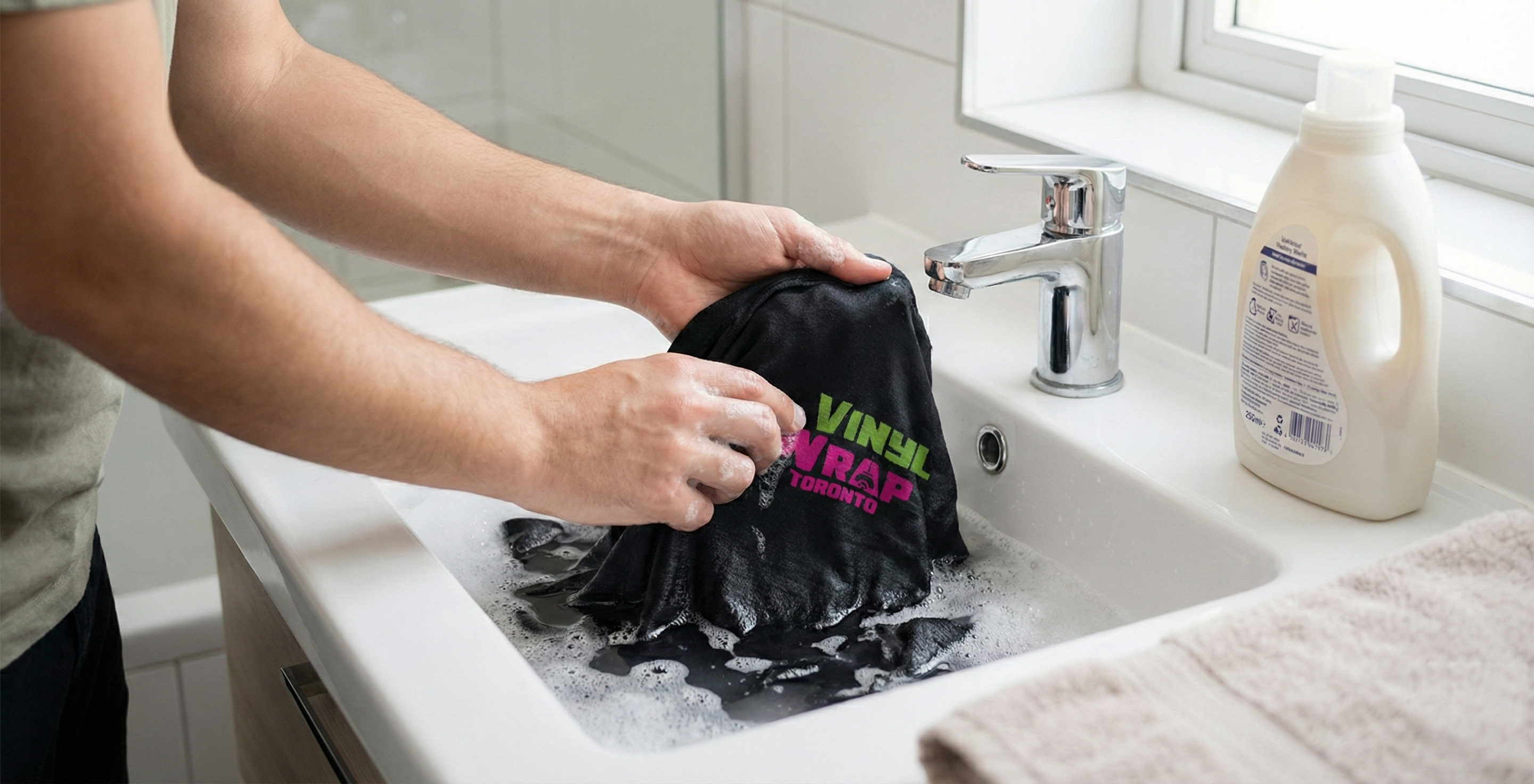
Hand washing is the gentlest method and is great for delicate items, but it isn’t strictly necessary for standard t-shirts. A machine wash on a “Gentle” or “Delicate” cycle with the shirt turned inside out is usually sufficient to protect the print.
4. How do I remove wrinkles from a printed area without ironing it?
A garment steamer is a safe alternative to ironing. Steam relaxes the fibers without applying direct contact heat to the print. If you don’t have a steamer, hanging the shirt in the bathroom while you take a hot shower can often release minor wrinkles.
5. Do different fabrics require different care?
Yes. 100% cotton is more prone to shrinkage in hot water than polyester blends. However, polyester blends (often used for moisture-wicking sportswear) should definitely avoid fabric softeners, as they clog the breathable fibers.


